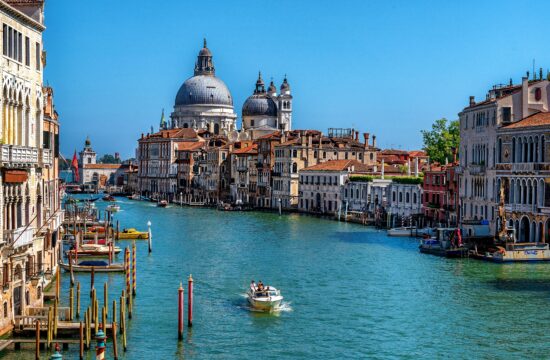
When Venice began charging day visitors for entry in 2024, it became the first city in the world to put a ticket booth — a digital one — at its gates. Critics called it the moment Venice officially became a museum; supporters called it overdue self-defense. In 2026, the experiment reached a new scale: the fee applied across a record sixty days, from April into July. With the season’s run complete, the first results are in, and they tell a more interesting story than either side predicted.
How the scheme works
The mechanics are deliberately simple. On designated peak days, day-trippers entering Venice’s historic center must register on a municipal platform and pay a fee — €5 for those who book ahead, rising to €10 for last-minute entries. Registration generates a QR code checked at entry points to the old city. Overnight guests, residents, workers, students and children are exempt; the target is squarely the day visitor who arrives in the morning, crowds the route from the station to San Marco, and leaves by evening having spent comparatively little.
The 2026 edition extended the scheme to sixty days — roughly double its original scope — reflecting the city’s judgment that the pilot years, whatever their limitations, were worth building on.
What the numbers say
According to figures reported at the season’s close, the 2026 run generated more than €5 million in revenue, with over 650,000 paid vouchers issued across the sixty days. City officials also pointed to preliminary analysis suggesting that overcrowding on the busiest days had softened compared with previous years — a first, tentative sign that the fee may be nudging behavior, not merely taxing it.
Both numbers deserve context. Five million euros is meaningful for maintenance budgets but marginal against the costs of running a city in a lagoon. And 650,000 paying visitors over sixty days confirms what skeptics said from the start: a fee of five or ten euros deters almost no one from visiting one of the world’s most famous cities. If the goal was fewer people, the price is plainly too low — a point the city’s own debates acknowledge, with proposals circulating to raise fees for last-minute peak-day entries far higher, with figures up to €50 floated in public discussion.
The deeper argument
The entry fee has always mattered more as a precedent than as a policy. Its real innovation is the principle that access to a fragile historic city is not unlimited and free — that day visitors, who impose the highest costs per euro spent, should contribute directly to the place they consume. The registration system also gives Venice something it never had: real-time data on who is coming and when, the foundation for any future system of caps, dynamic pricing or reservations.
The criticisms are equally serious. Charging entry does nothing about the forces hollowing out the city — the conversion of housing into short-term rentals, the loss of residents (the historic center’s population has fallen to around 50,000), the economics that make a souvenir shop more viable than a bakery. Some Venetians argue the fee actually legitimizes mass tourism: once visitors have paid, the city has sold its ticket and can hardly complain about the crowd.
What other cities are watching for
Venice’s experiment is being studied from Barcelona to Kyoto, and its lesson so far is nuanced: a modest fee raises revenue and produces data, moderately smooths peaks, and does not by itself reduce total visitor pressure. The next moves will be more telling than the first — whether Venice raises prices to genuinely deterrent levels, moves toward hard daily caps, and pairs entry management with policies that keep actual residents in the city. The fee has settled one question: cities can charge admission and the world keeps coming. The harder question — whether that admission can fund and manage a living city rather than a beautiful shell — is the one the next few seasons will answer.