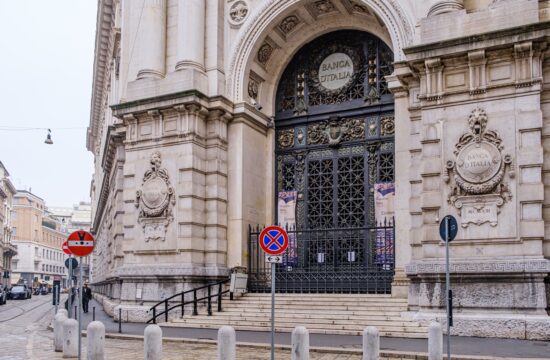
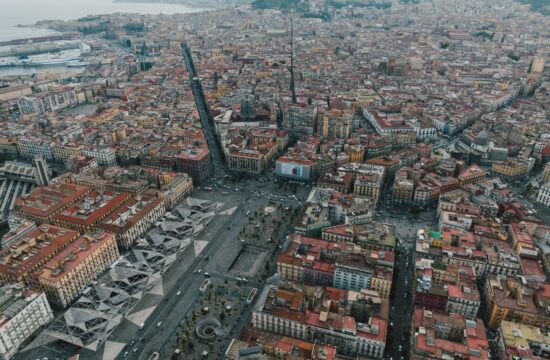
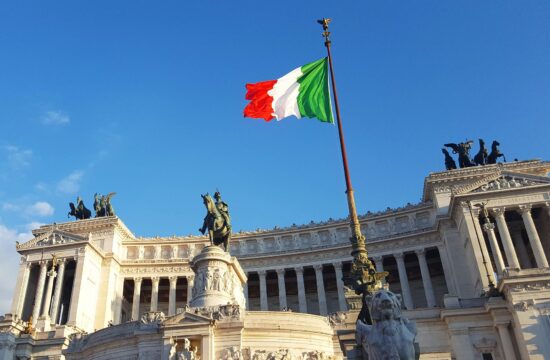
Italy has been a tourist destination for as long as tourism has existed. Goethe made the journey in the 1780s; the English gentry turned the Grand Tour into a rite of passage; and today, well over sixty million visitors arrive in a typical year, putting Italy consistently among the most visited countries on Earth. What has changed is not Italy’s appeal but its dependence: tourism has quietly become one of the pillars holding up the Italian economy — and the weight is starting to show.
The numbers behind the postcards
Measured broadly — including transport, restaurants, and everything travelers spend money on — travel and tourism accounts for roughly a tenth of Italian GDP and supports millions of jobs. In some regions the share is far higher: South Tyrol, Venice and its lagoon, the Amalfi Coast, and large parts of Tuscany and Sicily are economies substantially organized around visitors. For the Mezzogiorno, Italy’s structurally weaker south, tourism is one of the few reliably growing industries.
This dependence deepened for a structural reason: the rest of the economy stopped growing. Italy’s GDP per capita has barely risen since the euro’s introduction, its industrial base has narrowed, and its population is shrinking and aging. Against that backdrop, an industry that grows almost automatically — fed by global middle-class expansion, budget flights and cruise ships — became irresistible. Politicians of every stripe treat visitor records as good news, and by revenue they are.
The costs that don’t appear in GDP
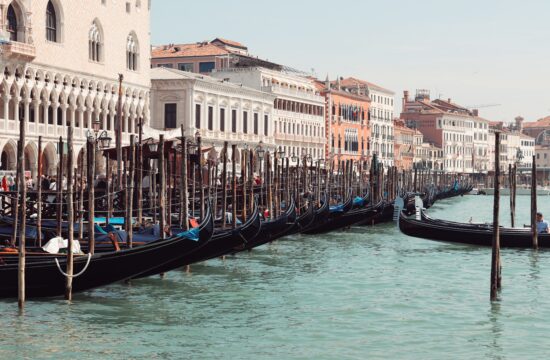
The problem is that tourism’s costs are local, concentrated and often invisible in national statistics. Venice is the emblematic case: a historic center built for a resident population that has now dwindled to some 50,000 hosts tens of thousands of visitors on peak days. Housing converted to short-term rentals pushes residents out; shops serving daily life give way to souvenir stalls; and the city’s fabric — bridges, alleys, fragile foundations — absorbs traffic it was never built for. Florence, Rome’s historic core, Capri and the Cinque Terre tell versions of the same story.
There is also an economic critique: tourism jobs are disproportionately seasonal, part-time and low-paid. An economy that shifts labor and capital from manufacturing and technology toward hospitality may be trading long-term productivity for short-term revenue — what some Italian economists warn is a slow “touristification” of the country’s economic model.
The policy experiments
Italy has become Europe’s laboratory for managing overtourism. Venice introduced an entry fee for day-trippers — the first city in the world to charge admission — and has extended and refined the scheme since. Rome has imposed new rules around the Trevi Fountain; Capri regulates tour flows; Florence has moved against key boxes and new short-term rentals in its historic center; trails in the Cinque Terre get one-way systems on peak days. Nationally, governments have tightened rules on short-term rental registration and raised tourist taxes.
The results so far are mixed and honest observers admit it. Fees in the single-digit euros deter almost no one, though they raise revenue for maintenance. Caps and reservation systems work but push crowds to the next unregulated destination. The harder levers — genuinely limiting cruise arrivals, restricting rental conversions, spreading visitors into the off-season and the undervisited south — collide with the interests of everyone earning from the boom.
The question Italy has to answer
None of this is an argument against tourism, which remains an extraordinary Italian asset: no country has a comparable density of art, landscape and food culture. The question is whether Italy manages tourism or is managed by it. A country that protects its historic centers as places where people actually live, invests tourist revenue in infrastructure rather than treating it as free money, and builds an economy where tourism is one strong industry among several will thrive on its visitors. A country that lets its greatest cities hollow out into theme parks will eventually discover that what the visitors came for is gone. Italy still has time to choose — but in Venice, at least, the clock is audible.