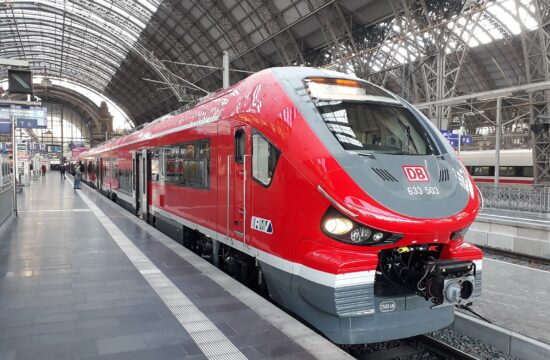
Deutsche Bahn plans to invest more than €23 billion in modernizing Germany’s rail network next year — an unprecedented sum aimed at addressing years of underinvestment that have left the network, in the company’s own words, outdated and overburdened.
The investment builds on roughly €19 billion spent this year alone, during which DB InfraGO renewed nearly 2,300 kilometers of track, along with thousands of switches and hundreds of kilometers of overhead lines. More than half of next year’s budget will go toward the existing network, with the rest split between digitalization, new construction, and station upgrades.
The scale of the disruption this creates is significant: Germany counted around 26,000 active construction sites on its rail network in 2025, and that number is expected to climb to 28,000 next year. Major routes — including Hamburg–Berlin, and Nuremberg–Regensburg–Passau — have faced extended full closures and rail-replacement bus services as part of the overhaul.
Early results are mixed. On the first major renovated corridor, the Riedbahn line between Frankfurt and Mannheim, disruptions have dropped over 60% since reopening — a solid improvement, though short of the 80% reduction DB InfraGO had targeted.
Separately, German regulators are also moving to loosen Deutsche Bahn’s grip on the long-distance market, proposing rules that would cap how much capacity the company can claim on the busiest routes — a change driven partly by pressure from Italy’s Italo, which is seeking to enter the German market by 2028.
For residents and travelers in Germany, the practical takeaway is unglamorous but useful: expect construction-related disruptions to continue for years, even as the long-term goal is a more reliable network.