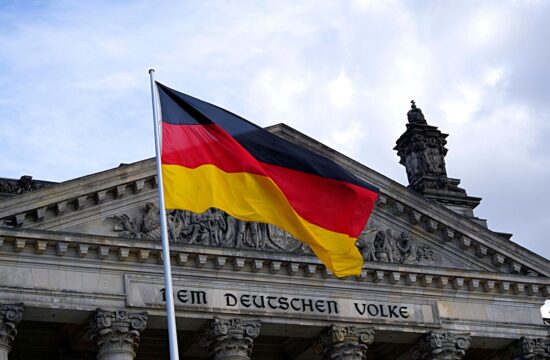
Germany’s economy is starting to show signs of steadying, according to the country’s Economy Ministry — though officials are warning that renewed conflict in the Middle East could still derail the recovery many had expected for the second half of the year.
In its latest monthly report, the ministry pointed to a US-brokered agreement with Iran aimed at easing the conflict, along with a subsequent drop in oil prices, as factors that have helped lift both business and consumer sentiment in recent weeks.
The cautious optimism comes on the heels of stronger-than-expected industrial data. Germany’s durable goods orders jumped 6.2% and industrial production for May came in better than forecast — early signs that the government’s massive €500 billion infrastructure and modernization stimulus, announced by Chancellor Friedrich Merz’s government, may finally be gaining traction.
Startup activity backs up the picture of a maturing, more selective market: funding is increasingly flowing toward sectors like industrial tech, defense, fintech, and applied AI, rather than consumer-hype ventures — with Berlin leading in fintech and software, Munich in deep tech and defense, and Hamburg in energy and logistics.
Still, the ministry’s own note of caution matters here — Germany’s recovery remains tightly linked to global energy prices and geopolitical stability, both of which the Iran conflict could easily upend again.
For businesses and residents watching Germany’s economic direction, the message from Berlin right now is: cautiously better, but not out of the woods.