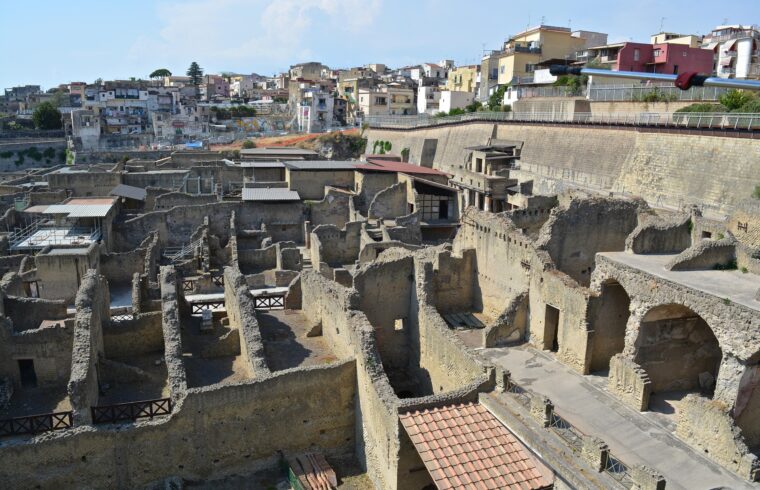
Nearly two thousand years after Mount Vesuvius buried the Roman city of Herculaneum in volcanic ash, researchers have achieved a milestone many thought might never come: the complete digital decipherment of one of the carbonized scrolls preserved by the eruption.
The achievement was announced at a conference in Naples in late June, marking the first time an entire scroll from the ancient site has been read in full, rather than in scattered fragments or partial passages.
The scrolls, part of what’s known as the Herculaneum Papyri, were buried and carbonized in 79 AD when Vesuvius erupted, destroying Herculaneum along with the more famous Pompeii. For centuries, the scrolls were considered unreadable — too fragile to physically unroll without disintegrating. Recent breakthroughs using digital imaging and computational analysis have allowed researchers to effectively “virtually unroll” and read the texts without ever touching the fragile material itself.
The find adds to a broader wave of activity around Italy’s ancient Roman sites this year — coinciding, coincidentally, with the reopening of Herculaneum’s “House of Carbonised Furniture” to the public after a three-decade closure for restoration.
For anyone with an interest in ancient history, classics, or archaeology, this milestone represents one of the more significant developments in Roman scholarship in decades — proof that some of antiquity’s best-kept secrets are still being unlocked, nearly two millennia later.